


To the rhythm of the water cycle
With climate change, water does not simply ‘fall from the sky’. Heavy rain now alternates with long dry periods. A lot of water flows too fast, almost invisibly, along our rivers out to sea. At the Rode Goor/The Liereman we let water take the lead again. Old channels are being cut off, while the existing water course is shaped with soft, natural interventions.
This keeps the groundwater topped up during dry summers and protects the peat layer. Targeted excavations bring water permanently to the surface: welcoming back waterfowl such as the spotted crake. The full glory of the original landscape is being restored: Corsican pines make way for heather and open grasslands.
With the active involvement of farmers, a design emerges that is supported and compatible with both nature and local residents. Once again, the area can move in tune with the rhythm of the water cycle.


"Dry peatland causes double the emissions of the entire aviation sector worldwide. So when we plea for less flying we should plea just as loudly to restore our peatland, our natural water and carbon sponge."
The Nete winds, nature revives
After decades of straight lines, the Kleine Nete in Herentaals is rewinding. Across Olens Broek, a boggy area covering 185 hectares with alder swamps, hay meadows and river dunes, the water is meandering just like it used to. Four cut-off meanders are reconnected: creating 1,700 metres of new river.
This brings a greater habitat for fauna and flora, more water storage and less dehydration in the area. The re-meandering is part of the Blue Deal and aligned with insights from our award-winning study Droge Delta (Dry Delta). It shows how soil, relief and land use determine local water behaviour. In Olens Broek, this translates into a spongy landscape that tempers drought, strengthens biodiversity and creates room for soft mobility.


"What I really appreciate? Collaboration creates positive waves here. Together, we are ensuring that water is not a problem but an opportunity for people, nature and society."
Every drop counts
Ponds are drying up, trees are losing their leaves and brackish water is displacing fresh groundwater. The drought can also be felt in Antwerp. In efforts to protect precious drinking water, the city is building a circular water network that will eventually be able to redistribute daily volumes of up to 3,500 mN of purified surface water, equivalent to 25,000 swimming pools a year.
Water from the Groot Schijn and permanent dewatering still flows to the harbour, where it turns saline, but it will soon get a second chance in ponds, parks, fountains and public buildings. Resulting in a greener Antwerp, less pressure on our drinking water supply and groundwater level replenishment. We are helping to design the two circular water networks, Zuid and Schijn. These deliver the water to consumers through sustainable pipes. To limit nuisance, we align their installation with scheduled roadworks and make smart connections with existing utilities.

Brownfield goes blue and green
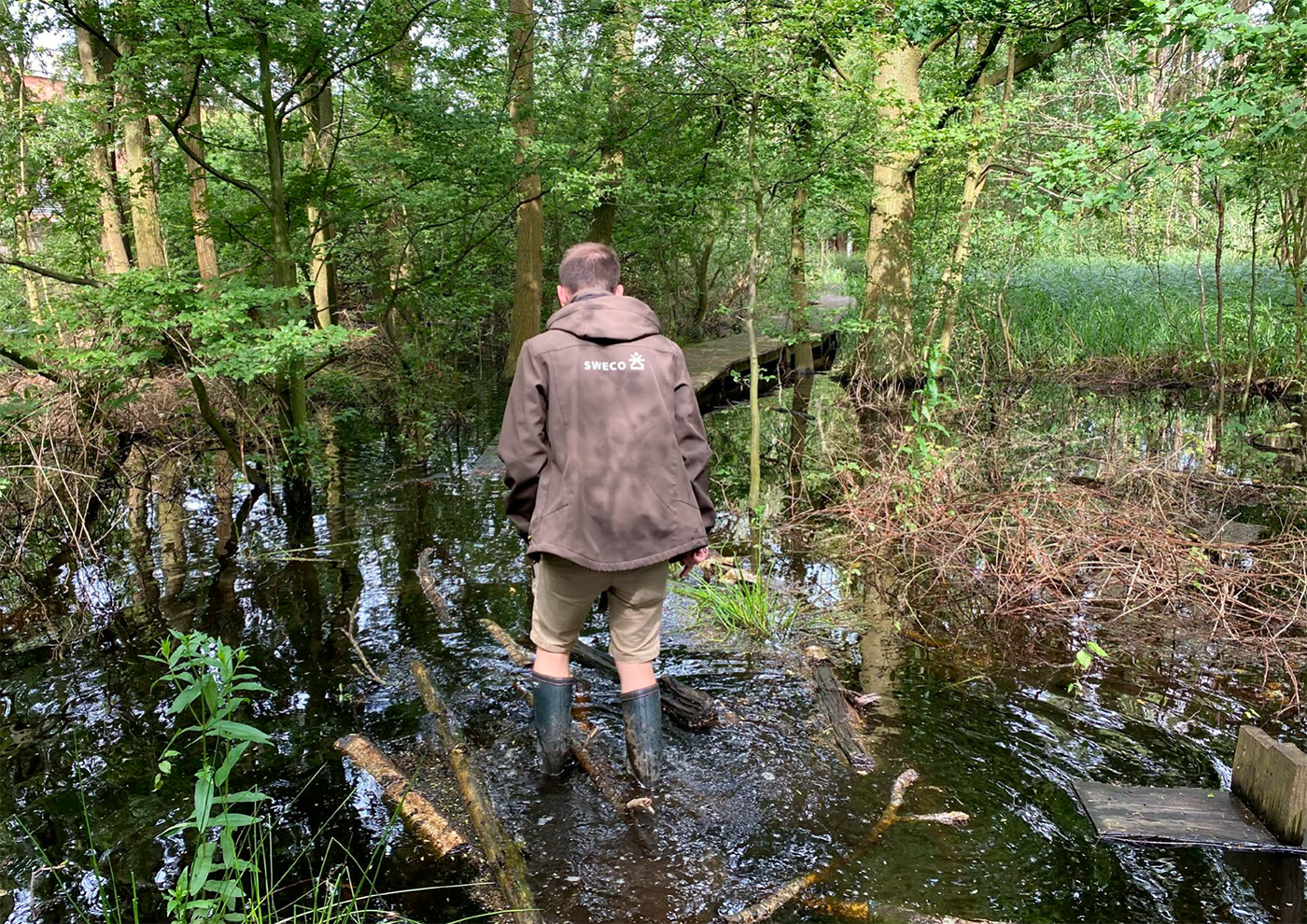
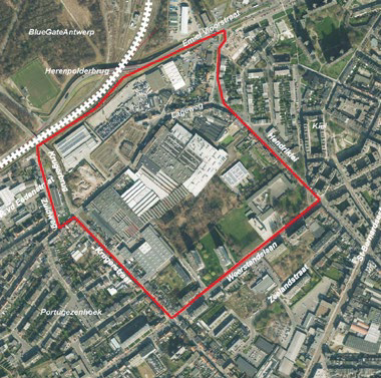
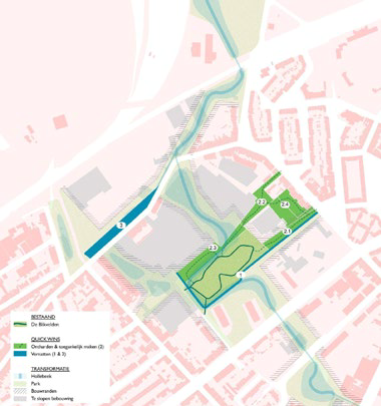
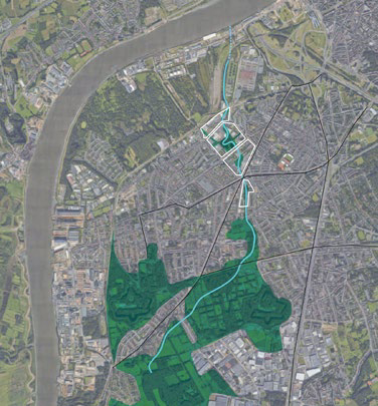
At Lageweg in Hoboken, a polluted 30-hectare brownfield – with industrial relicts like Hayes Lemmerz and Crown Packaging – is getting a new lease of life as a climate-robust neighbourhood. The Hollebeek watercourse is being brought back above ground and forms the backbone with its blue-green veins. Thanks to hydrological modelling, integrated water management, soil research and remediation strategies, we are limiting the spread of contamination.
Landscape design and ecology are also important. Ten hectares are being designed as a floodable park, buffering water and stimulating biodiversity and get-togethers. The remaining space will gain a mix of residential, entrepreneurial and public facilities. Thus turning a polluted place into a pleasant and resilient district.

A first in Flanders: out with micropollutant, in with clean water
A FIRST IN FLANDERS: OUT WITH MICROPOLLUTANT, IN WITH CLEAN WATER
Europe is setting its sights higher, Flanders is leading the way. The new European Directive on Urban Waste Water Treatment obliges all member states to remove micropollutants from waste water by 2045. This concerns persistent substances such as medicines, pesticides and hormones. An additional step in purification is required: quaternary treatment. Aquafin is embracing this challenge in Aartselaar. The extra step is done in an innovative installation which combines ozonisation and active carbon.
With this pilot project we are investigating how we can improve the quality of our water courses and which technologies are required to satisfy today’s and future standards. We are taking charge of the entire study process: from feasibility and the permit procedure to a completed design with all engineering disciplines. Flanders is among the leaders in Europe with this first full-scale quaternary treatment. Water courses like the Grote Struisbeek are regaining their health and, as humans, we are winning too, thanks to the assurance of pure water.