

Two streams, one mission: clean water
Today, 94% of Flemish people are connected to the sewer network, but there are still big differences between urban and rural municipalities. Sometimes waste water still ends up in nature. That is why Flanders is investing to improve water quality and meet the European targets by 2027. We are contributing to the transition to a separate sewer network.
Rain and waste water are kept separate, so that watercourses are cleaned again and streets remain dry during heavy rainfall. In Beitem, we are going one step further: there, we are laying 550 metres of drains with pipes made of sulphur concrete. A Belgian innovation that reduces carbon emissions by between 50 and 85% and is fully circular. On this project alone we save almost 50 tons of CO2. Smart choices below ground make the difference on the surface.


Belgium's first traffic woven intersection
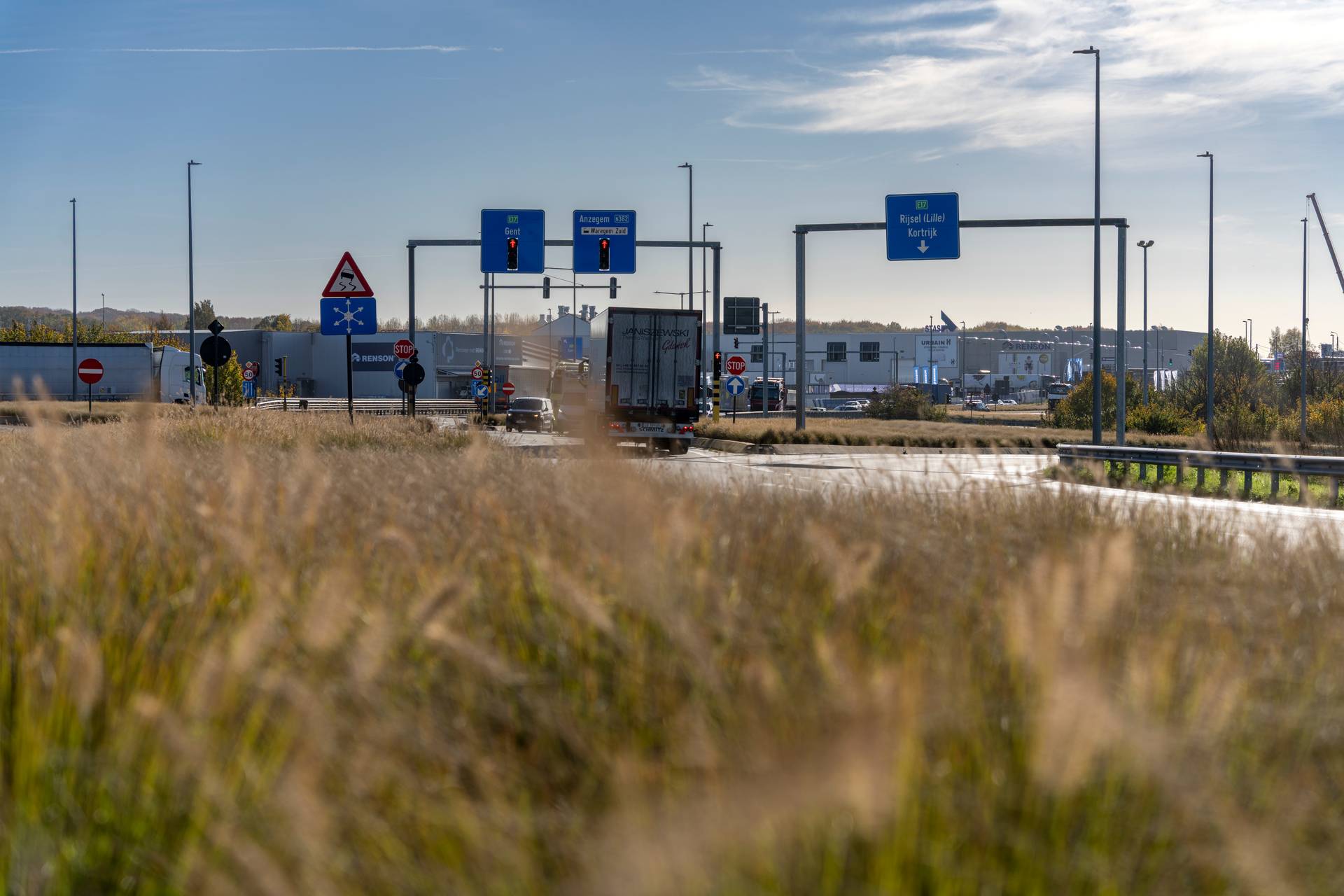
On the E17 in Waregem, a renovated slip road complex facilitates a smoother flow and better safety. The Diverging Diamond Interchange, a node in the form of a woven plait, is the first of its kind in Belgium. The ingenious complex allows traffic to change direction, eliminating long traffic jams on the hard shoulder and preventing dangerous situations.
Now, drivers turning left towards the E17 encounter only one traffic light. Resulting in less delays, more safety and better accessibility of the surrounding business parks. We are doing the feasibility study, modelling the traffic, designing the landscape and developing the complete preliminary technical design up to the tender.


Abby gives astonishing art new energy
In the sixteenth-century Groeninge Abbey and the former museum Courtrai 1302 you can now also admire contemporary art. Old walls are in open dialogue with a new wing, where the real surprise lies underground: Two state-of-the-art exhibition halls plus the chapel provide 1,000 metres of exhibition space. We are designing the installations for heating, ventilation, sanitary facilities, electricity and lifts, with our eye on renewable energy and technical redundancy.
Thanks to these integrated techniques and an innovative ventilation concept, masterpieces by Gustave De Smet, Jean Brusselmans or Rinus Van de Velde will be displayed in a safe, ideally suited environment. The high level of difficulty requires close guidance from the client and architect. We are assisting them, following every phase meticulously and monitoring the quality down to the last detail. Giving Courtrai a delightful new contemporary beacon for visual art and design.


Healing architecture aids children's recovery
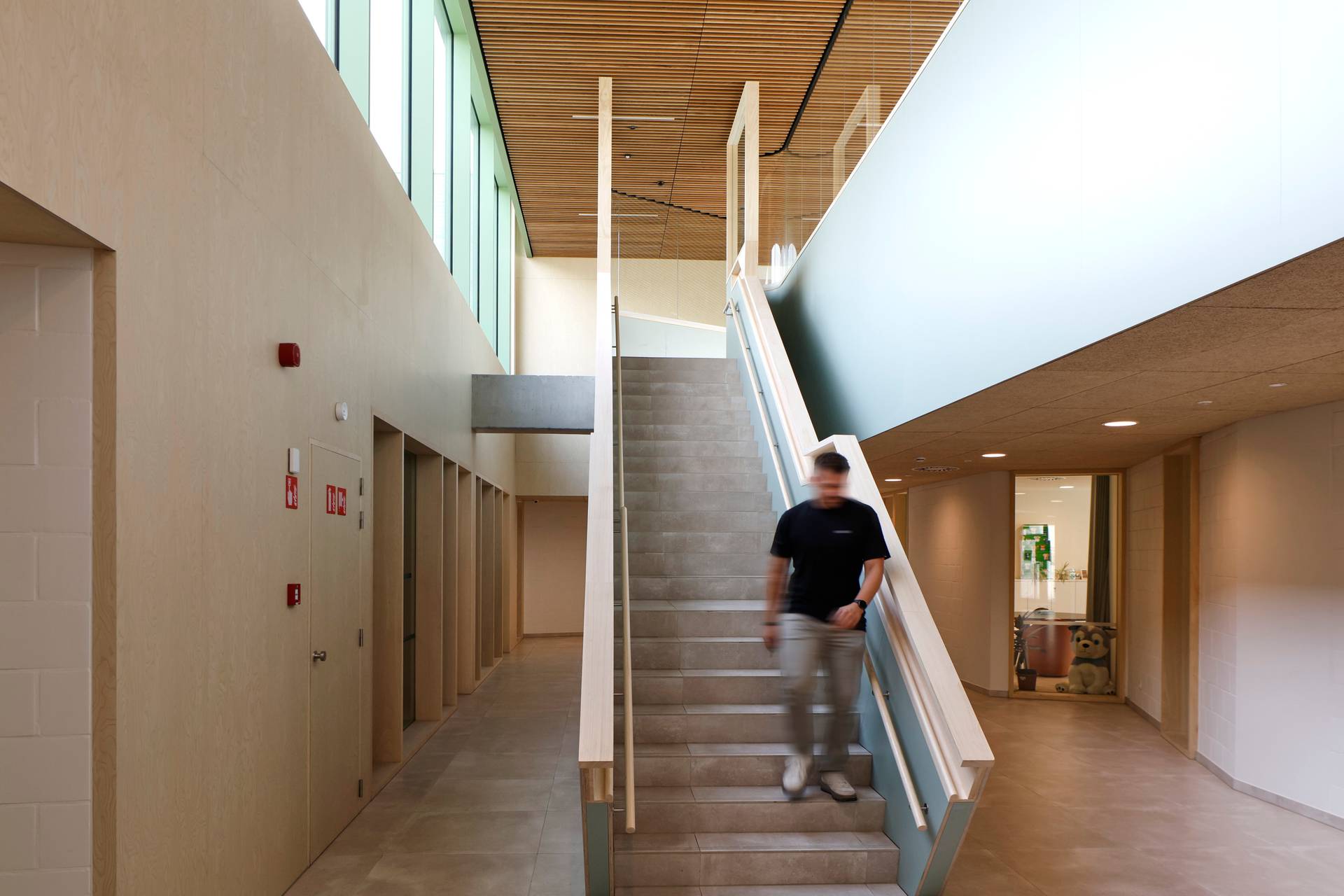
In 1974, De Korbeel became the first accredited child and youth psychiatric hospital in Flanders. In 2007, the forensic youth department De Patio was added. The fully renewed campus offers three times more space than the old building. Space that brings tranquillity. Here, young people with psychological vulnerabilities find a healing environment. Five small-scale residential units, each with their own courtyard garden and age-specific organisation, are arranged like safe islands along a central play street. This lively axis brings therapy rooms, classrooms and a sports hall all together.
The architecture speaks the children’s language: white façades with green glazed accents, playfully positioned windows and warm materials create an environment that radiates positivity. Artwork, garden walls, and sightlines toward Groeninge Park anchor the building in the neighbourhood. Through the integration of master planning, architecture, sustainable design and special technical installations, the project received an honourable mention at the European Healthcare Design Awards.




Roomy redesign at entrance gate
Tournai's station square is no longer a place for rushing by, but an invitation to stick around. Where cars once dominated, you will now find spacious walking zones, ornamental trees and Crombezpark, which since its renovation has thus regained its place as a green lung in the city. This redevelopment connects the station with the historic heart of Tournai and creates space for gatherings, trade and leisure. With this metamorphosis, a fragmented, traffic-centred environment has become a coherent public space.
The square has been transformed into a large pedestrian area, where porphyry and bluestone paving stones have been reused and combined with new strips of concrete. Thanks to our integrated approach and design, the station square is now a fully-fledged gateway to Tournai. Train, bus, bike and pedestrian flows move seamlessly together in an intermodal hub, along safe paths and with less car traffic. Creating a place that allows the city to breathe and which puts its inhabitants first again.