

.jpg)

Precision and transparency in bioproduction
UCB Inflexio is rising as a beacon of innovation within the pharmaceutical landscape. This versatile biological production facility is designed for the advanced development of medicines and the commercial production of monoclonal antibodies. The campus combines a hi-tech production unit with a utilities building, linked above and below ground by technical systems that ensure seamless operation.
Every detail of the facility has been optimised for efficiency and environmental performance. Rooms and equipment are integrated to reduce energy consumption, carbon emissions and waste, while water is carefully managed and reused. The architecture of the production unit radiates precision. A dark mineral base anchors the building, while a fully glazed façade floats above it as one continuous surface, with no visible fixings or joints.
We refined the project down to the smallest detail: the warm, colourful interior now reflects the clarity and elegance of the façade, creating harmony between the shell and the soul of the building.


Heritage hand-in-hand with circular design
The Lebeau-Sablon project aims to revitalise an under-utilised urban block by reaffirming its urban identity, with sustainability and contextual integration at the heart of its design. With a restrained architectural language that respects the scale and character of the neighbourhood, the plan fits harmoniously into the existing urban fabric, reinforcing street continuity and the quality of urban sightlines.
We are preserving 75% of the existing structures and renovating according to circular principles. Historical façades are being retained, while light wooden and red-zinc volumes nestle elegantly above them. Transparent plinths and open bases bring light and vibrancy to street level, with ceramic details that echo the local finesse. At the heart of the project lies a 1,500 m² green courtyard garden. Heating is provided by geothermal energy and underground heat storage (Aquifer Thermal Energy Storage), supplemented by heat pumps and rooftop solar panels. Comfort and well-being are anchored in BREEAM Outstanding and WELL standards.
.jpg)


Door to European values
In the European Parliament, the Zweig Visitor Centre welcomes thousands of daily visitors. It forms a carefully orchestrated starting point for the visitor experience and connects the Parlamentarium, the House of European History and the Hemicycle. The project integrates architecture, interior design and urban planning, embodying the core values of Europe: transparency, diversity and inclusivity.
In front of the building, a green esplanade brings life to a mineral environment. Large white concrete planters, which also serve as benches, line the main route and invite visitors to pause and explore. Three elegant canopies provide shelter and enhance comfort.
Inside, a sloping glass roof transforms an existing patio into a double-height agora: a graceful space that underscores the civic nature of the building. This subtle orchestration of volumes, light and movement turns circulation into an experience and creates a welcoming, open and well-balanced introduction to the work and ideals of the European Parliament.


Landmark where less is more
Just steps away from Brussels Airport, The Cube rises as an office building designed for connection: local, urban and international. The architecture blends advanced sustainability with smart-office innovation, resulting in a carbon-neutral complex that achieves top scores in BREEAM, WELL, and DGNB. The concept embraces a minimalist approach: a pure cubic form, carefully carved and shifted to create a dynamic, almost futuristic appearance.
Vertical and horizontal lines are intersected by bold diagonals, as if the building were split by a bolt of lightning. The façade reinforces these incisions. A raised plinth accentuates the entrance and invites passers-by into a ‘spatial dialogue at eye level’, where the boundary between public space and interior dissolves. Inside, the ground floor becomes a lively destination, with a gym, restaurants and a food market accessible to all, turning The Cube into more than just a workplace.


New eco-hub for future generations
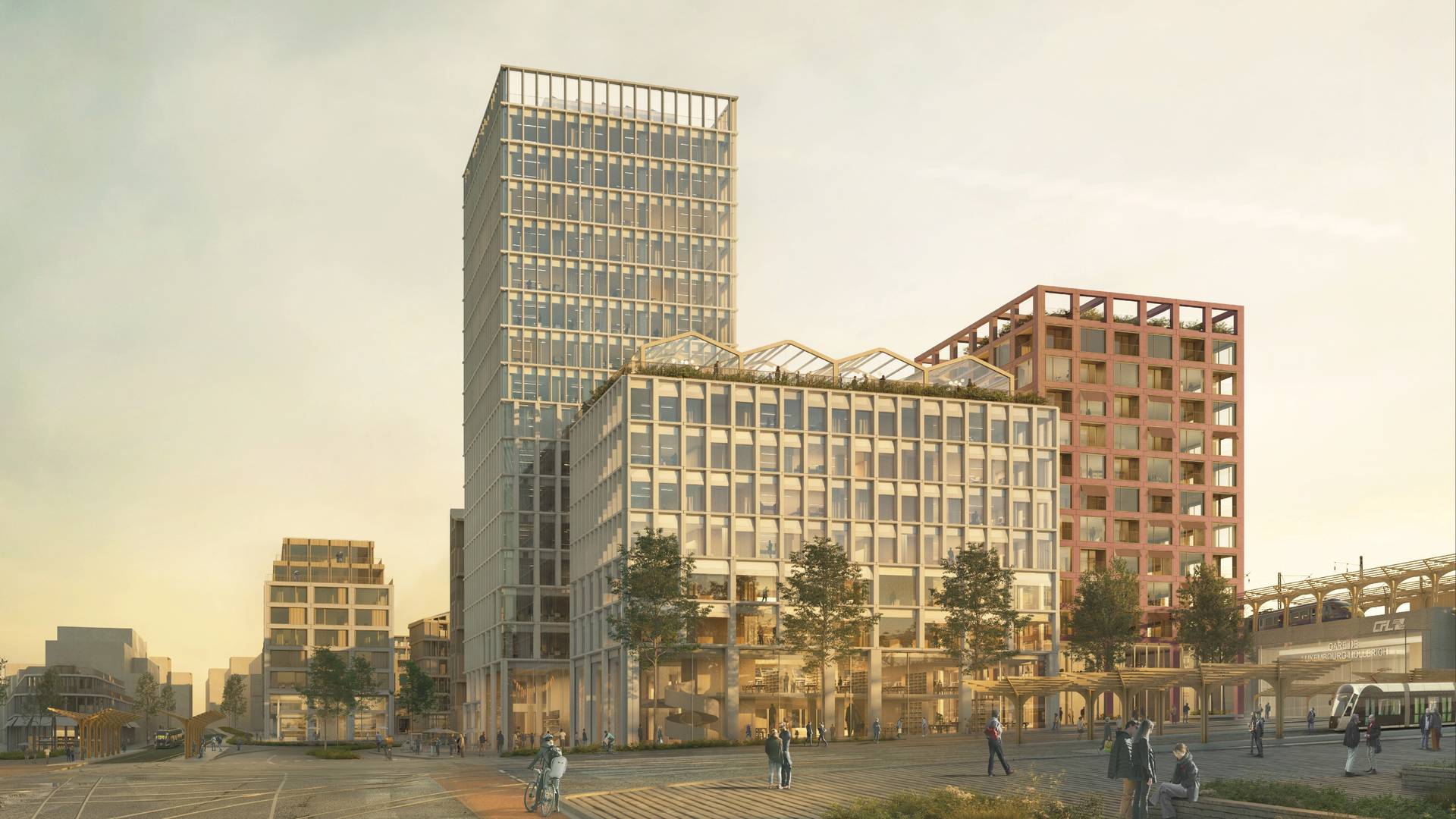
Nei Hollerich is becoming a new urban destination that makes optimal use of the city’s topography to create a green, mixed district. The master plan prioritises affordable, intergenerational housing, complemented by commercial, cultural and public functions. It positions the area as a multimodal transport hub to relieve pressure on Luxembourg’s infrastructure.
By transforming a former industrial barrier, it reconnects adjacent neighbourhoods, creates new synergies and links two areas of nature using a continuous green corridor that enhances biodiversity. Guided by a ‘less is more’ approach, the design focuses on embodied and operational energy efficiency, material optimisation and reuse, and low-carbon materials such as timber. Flexible building typologies and a diverse mix of public spaces support adaptability, social interaction and an inclusive, resilient urban district.