


(Sw)eco touch
The bright red body of a ladybird spider emerges from the sand. Here, on the edge of Bosland National Park, fragmentation makes way for connection. The new Waaltjesbos ecoduct across the N71 is a lifeline for biodiversity. Under a wide stretch that spans the traffic, embankments blend naturally into the landscape. The edges are finished with strong gabions, but the real magic lies in the natural strips above: an open, sunny zone with heather in the centre, sheltered shrubs on the flanks and pools at the head. Every species finds its way there: from smooth snakes to foxes.
With its smart blend of landscape, ecology, architecture and civil engineering the design is careful and clever: low-carbon materials, a neutral soil balance and rainwater that nourishes the soil without wells. Countless animals feel at home in the surrounding landscape, which we are helping to shape through the Waaltjesbos nature management plan. With Dilserbos and the Zwarte Berg eco-valley, we are also bringing fragmented nature back together cohesively


A high-speed velodrome
The race is on. What was once the dream of former professional cyclist and champion Marc Wauters is now reality: the velodrome in Heusden-Zolder. On this 250-metre track, we are on course for success in sustainability and technical stability. Thanks to BIM technology, we avoid clashes and optimise airflow, which is crucial, since the ventilation must not disturb the flight of a badminton shuttlecock on the central sports field.
The stability of this elite sports complex is a technical feat: the steel trusses span 78 metres without columns in between, providing unobstructed sightlines for TV cameras. They are arched and vary in height depending on the distribution of forces and the position of ventilation units. The planks in the wooden track are supported by 380 wooden trusses, which were laid in just two days and fastened with over 250,000 nails. If all the wooden slats were placed end to end, they would stretch for roughly 60 kilometres.


At home in Zonhoven
The Heilige Catharina residential care centre is gaining a entirely new building right next to the old monastery. Thanks to a sophisticated master plan, space will be created on a built-up site, while quality of care will lead the way. Our design keeps things small scale, with a focus on warmth and gathering. The building opens out onto the courtyard, the school and the village. This creates a vibrant village hub, a welcoming place that strengthens the sense of community. The star-shaped volumes with small living groups offer a sense of protection.
Each group of residents shares their own ‘square’: a homely living space where you truly know your neighbours. Circulation flows have been redesigned to keep cars away. Visitors, staff, and logistics move around the perimeter, so that the site centre is entirely reserved for pedestrians and cyclists. Concrete core activation throughout the new buildings also ensures a stable and energy-efficient indoor climate. With low energy consumption and a minimal ecological footprint, this is a future-oriented project that connects healthcare, the village and the wider community.


Village centre full stream ahead
In the 1960s, the Roosterbeek stream disappeared underground, encapsulated and invisible. Today, it flows once again through the heart of Zonhoven in a meandering, open channel. Thanks to our master plan and design, water and the broader ecosystem are regaining space. The village benefits from cooling refreshment, increased water availability and improved flood safety. At the same time, nearby De Wijers, with its 1,001 secret ponds, becomes a little more tangible.
The village centre is transforming along with the stream. Stone is making way for a vibrant park. No fewer than 29,000 flowers and more than 100 trees are being added. With a new cycle path, lighting and additional play areas, ecology, experience, and mobility are merging into a single story.


.jpg)

Breathing space for nature: from Demer bend to terril top
In the Prinsbeemden nature reserve, we are restoring a historic water system, originally designed to drain agricultural land. This will regulate the water level and create a habitat for the common mud creeper, an umbrella species that stimulates biodiversity. The area will gain a boardwalk, picnic area and a viewing tower overlooking the meandering river. During high water periods, the Demer is free to flood here, but controlled, providing additional water buffering and strengthening the battle against drought.
At Klaverberg, a former mining slag heap in the Hoge Kempen National Park, we are combining nature restoration with recreation. Protecting habitats for skylarks and nightjars, while visitors enjoy a spacious boulevard, plus areas for walking and mountain biking. Steps to the top provide panoramic views and also keep vulnerable slopes safe from erosion. With these nature management plans, we are strengthening the natural values and contributing to a green-blue oasis. The local economy, recreation and precious heritage are accommodated too.


From mining trail to cycle track
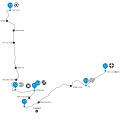
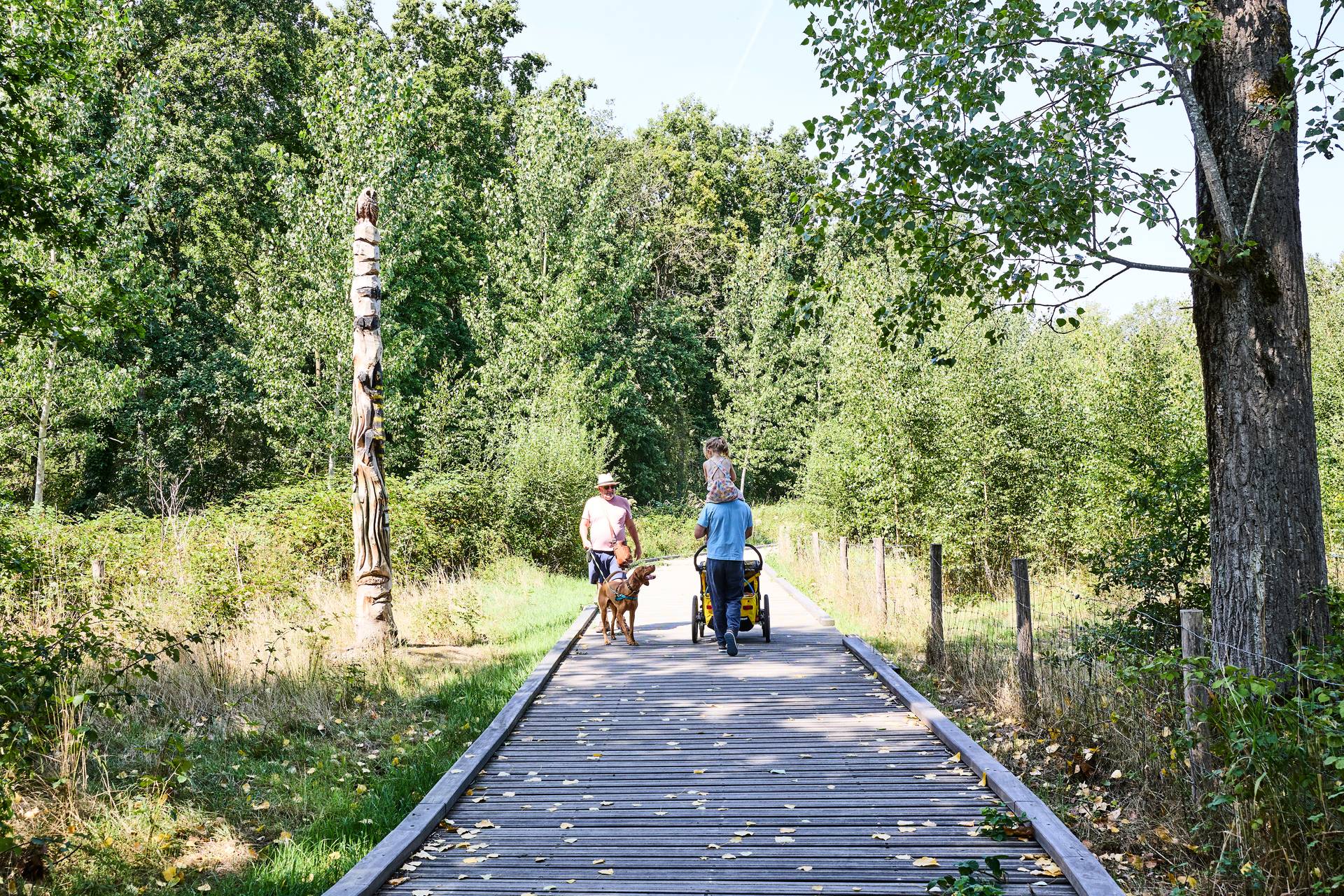
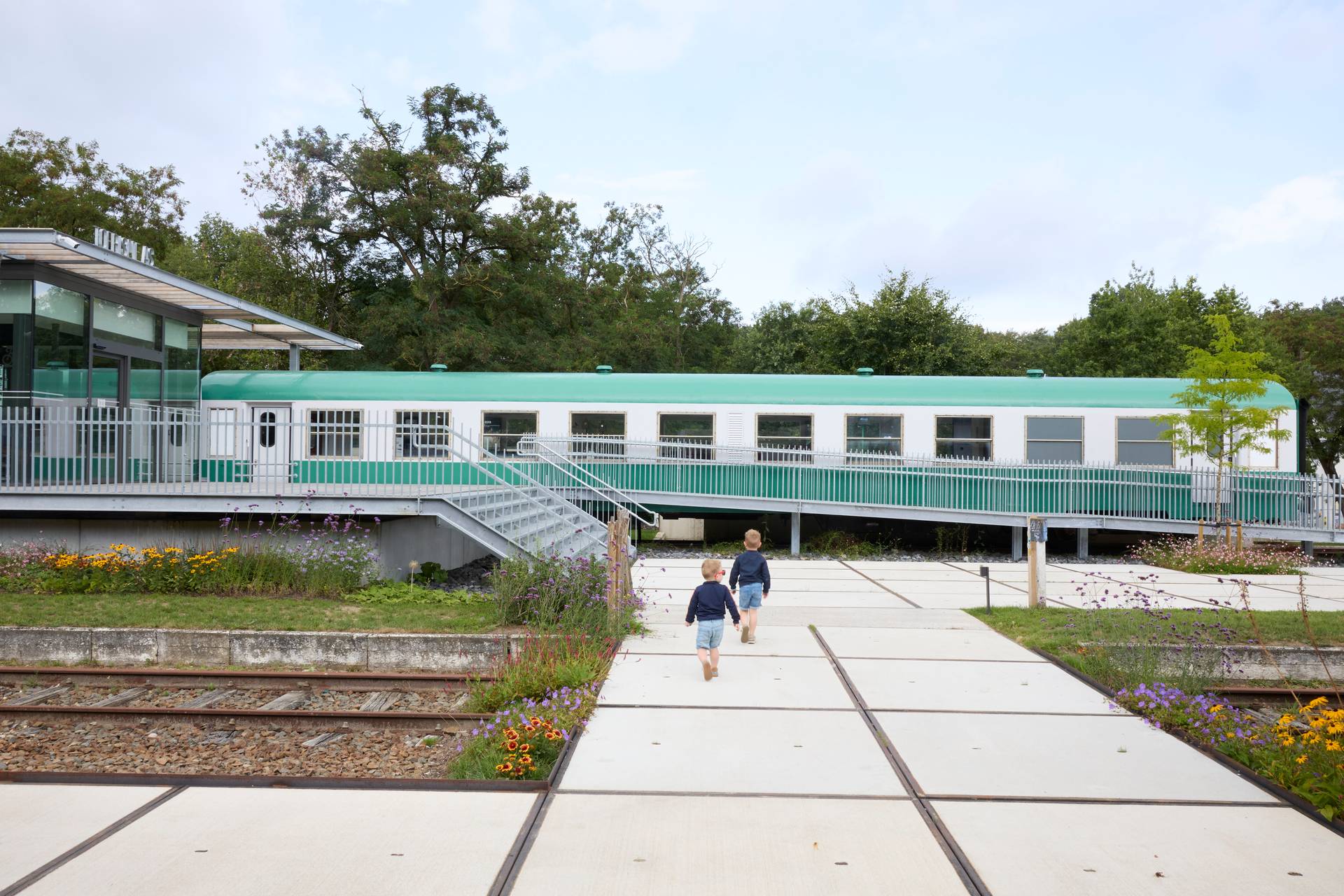
The Coal Trail is being transformed into a 77-kilometre cycle path that connects the mining history with the future in Central Limburg. The first section will wind its way 12 kilometres from Genk-North via Zwartberg and the KRC Genk stadium as far as As station. Benches along the way invite you to take a break, while connections to other cycle highways speed up functional traffic.
A spiral path leads you to a wood-finished cycle tunnel for a safe and smooth crossing. From design to implementation, we are fully embracing innovation with adjustable lighting and sustainability: local reuse of cobblestones under the old railway lines, eco-guiding with amphibian tunnels and even a sheep tunnel for grazing projects.
The Coal Trail is taking shape thanks to an integrated approach to innovative infrastructure and mobility, as well as ecology, landscaping and stakeholder management. Soil research and demolition monitoring are naturally not forgotten. A story at cycling speed. To suit people, animals and landscape.




"My grandpa worked as an electrician in the Eisden mine. For years, he rode his bike to work every day. That the Coal Track is now being revitalized as a bike highway adds a special touch for me."
Battery park competes in Europe's top league
Solar panels and wind turbines provide us with green electricity, but that power follows the rhythm of nature and is not always available. Battery parks allow us to fully harness renewable energy. They make our energy system flexible: when wind and sun are abundant, we store the surplus, and during peak moments we feed it back into the grid.
In Rotem, Green Turtle is evolving into a project of unprecedented scale. With a capacity of 700 megawatts, it is set to become one of the largest battery parks on the European mainland, capable of supplying green electricity to 385,000 households. Where do we make the difference? By bringing together multiple disciplines into one integrated design. We combine digital precision with deep expertise in high voltage, fire safety and risk analysis. As specialists, we continue driving the green transition forward, with battery parks playing a key role in building a sustainable, resilient and balanced electricity grid.